Colorado apostille services cover the full path from a ready document to a finished apostille. The Colorado Secretary of State issues the apostille, and we review the document, notarize it when a notary is required, file the request in Denver, and ship or hand over the result.
What our Colorado apostille services include
A Colorado apostille is not something you buy off a shelf. It is the last step of a short chain, and each link has to be correct. Our service covers every link so you only have to hand over the document and tell us where it is going.
- Document review. We check whether the document is an original, an original certified copy, or a paper that needs a notary.
- Notarization. If your document needs a Colorado notary signature, we notarize it in person or, for eligible electronic documents, through remote online notarization.
- State filing. We complete the Colorado Secretary of State's apostille request form and submit your documents at the state office on Broadway in Denver.
- Delivery. You pick the finished apostille up in Denver, or we ship it with FedEx, DHL, UPS or USPS domestic.
The state describes its own rules on the Apostilles and Authentications page. Since April 2, 2018, the Secretary of State issues one combined certificate of authentication. In countries that belong to the Hague Apostille Convention, that certificate serves as the apostille.
Which documents qualify
The Secretary of State authenticates the signature on a document, not the document itself. That means it can only act on documents signed or issued by an official it can recognize. Common examples are:
- A document signed before a Colorado notary, such as an affidavit, power of attorney, consent letter, declaration or translation affidavit.
- A certified copy issued by a Colorado county clerk and recorder, such as a recorded document or a marriage certificate.
- A certified birth or death record issued by Colorado vital records.
- A record issued by the Colorado Secretary of State, such as a business filing.
The state is clear about the limits. It may only authenticate original certified copies issued by a Colorado notary, a county clerk and recorder, the Secretary of State, the State Archives or Colorado vital records. A photocopy will not work, and neither will a copy certified by a person who is not allowed to certify that type of record.
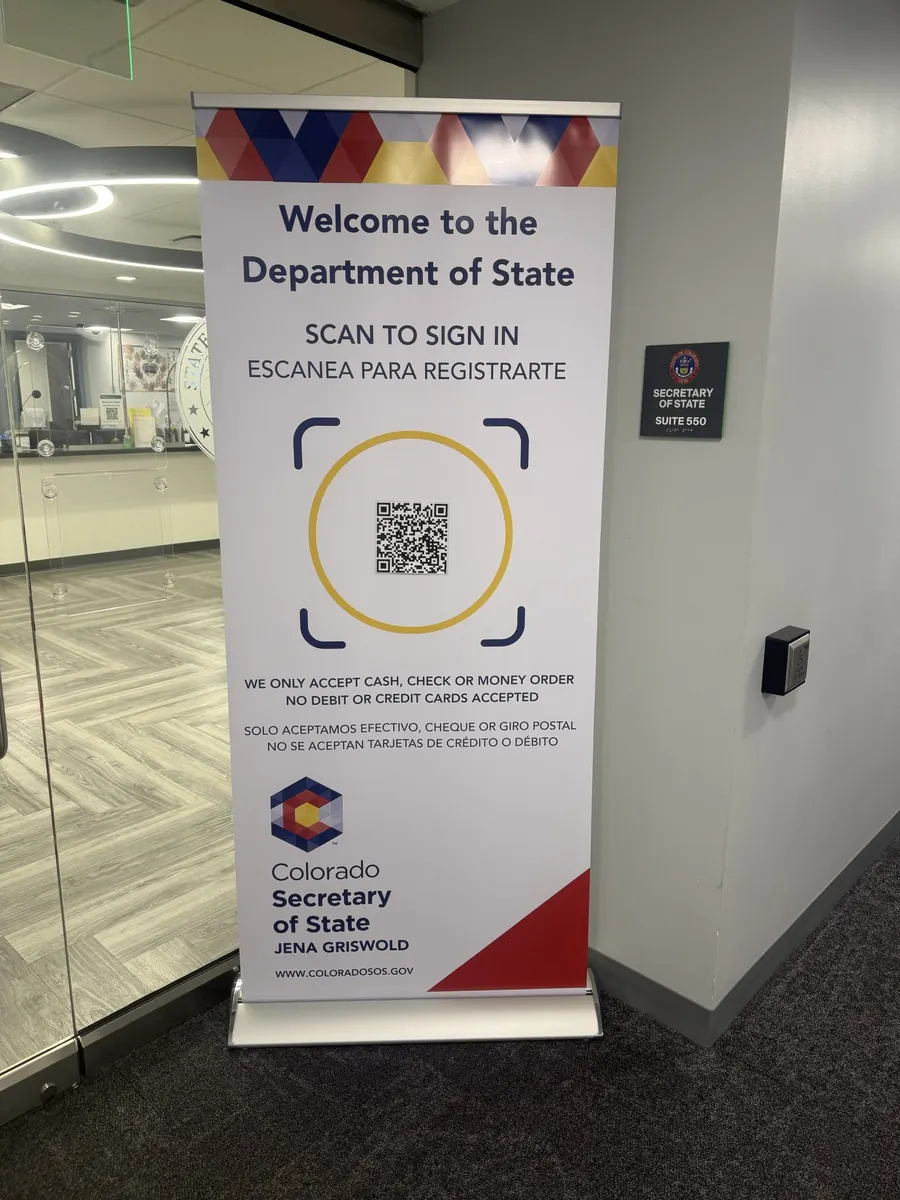
Getting the certified copy
Many documents need a certified copy before they can get an apostille. If you need a vital record such as a birth certificate, we can assist you with ordering one. We cannot pick up birth certificates, but you can have them shipped to us. We can obtain marriage certificates and other records from county offices within about 40 minutes of us, case by case. Ask us first and we will tell you which route fits your document.
Why the notary matters
For private documents, the apostille authenticates the notary. The state checks that the notary signature on your paper belongs to a notary who held an active Colorado commission when the document was notarized. If the notary made a mistake, the state rejects the request. The Secretary of State lists improperly notarized documents among its common reasons for rejection.
We are a Colorado notary, and we notarize documents knowing they are headed for an apostille. That means we confirm the signer, the date, the certificate wording and the seal so the state office has nothing to question. We also tell you before the appointment if your document cannot be notarized as written, for example because it is blank or incomplete.
The request form
Every apostille request goes in with the Secretary of State's Apostilles and Authentications Request Form. It asks for the requestor's contact details, the country where the documents will be presented, the number of apostilles, and how the finished documents should be returned. You can open or download the official form here: Colorado apostille request form (PDF).
The form also states that apostilles cannot be issued for the United States and its territories, which are American Samoa, Guam, the Northern Mariana Islands, Puerto Rico and the U.S. Virgin Islands. If your document is going to one of those places, you do not need an apostille.
Countries and the Hague Convention
The apostille only works in countries that are parties to the Apostille Convention. The Hague Conference publishes the current list of member countries on its Apostille Convention page. If your destination is not on that list, a Colorado apostille is not the end of the process. The destination country may also require authentication by its own embassy or consulate, and that extra step happens after the state issues its certificate. We will tell you what we know, and we suggest you confirm the requirement with the office that asked for your document.
Tell us the country when you contact us. The state asks for it on the form, and it affects how we handle the request.
Fees
The Colorado Secretary of State sets its own state fee for each apostille, and our service fees depend on your documents, how many there are, and whether you need notarization, pickup or shipping. Please reach out to us for a quote. Tell us what you have and where it is going, and we will give you a total before we start.
How long it takes
Colorado state apostilles take from the same day up to 48 hours, depending on our schedule. Appointments that finish after 12 PM noon are completed the next day. We cannot promise or guarantee any turnaround, because the state office sets its own pace and holds its own hours. The state's expedited walk-in service ends at 4:30 PM on weekdays, according to the Secretary of State contact page.
Federal documents, such as FBI background checks, do not go through the state at all. They go to the U.S. Department of State in Washington, DC, are not notarized, and take several weeks, and the U.S. Department of State says about five weeks for mailed requests. See the FBI background check apostille page for details.
Checking a finished apostille
After you receive your apostille, you can confirm it is genuine using the Secretary of State's apostille verification tool. It works for authentications the state issued on or after April 5, 2011. Some foreign offices check this themselves, so keep the number printed on your certificate.
Ready to start? Email your name, the type of documents, how many apostilles, the country of use, your preferred date and time, and your location. We reply with a booking link.
Frequently asked questions
Who issues a Colorado apostille?
The Colorado Secretary of State issues Colorado apostilles. We review the documents and file the request for you.
Do we need to be in Denver to get one?
No. You can send documents by mail or courier, or meet with us where you are. We can ship the finished apostille to you.
Does the apostille change our document?
No. The apostille is a separate certificate attached to the document. It authenticates the signature and seal, and it does not change the contents.
Can one apostille cover several documents?
No. Each public document needs its own apostille.
What if our country is not in the Hague Convention?
The country may also require authentication by its own embassy. Confirm the requirement with the office that asked for your document, and tell us the country so we can advise.
How much do your apostille services cost?
Please reach out to us for a quote. The total depends on your documents, how many there are, and whether you need notarization, pickup or shipping.
Related pages
- Birth Certificate Apostille
- Marriage Certificate Apostille
- Business Document Apostille
- How to Get an Apostille in Colorado
- Apostille with Expedited Shipping
- Mobile Notary Services
- Mexican Sworn Translation
Last updated November 26, 2026.